
Indian HOLOCAUST Mya Farther`s Life and Time- SIX HUNDRED ONE
Palash Biswas
http://indianholocaustmyfatherslifeandtime.blogspot.com/
http://basantipurtimes.blogspot.com/
Tsunami and Nuclear EMERGENCY in Japanm disaster Management there Herald RED ALERT for Indian NUCLEAR PLANT Annexed Aboriginal Humanscape!The biggest earthquake to hit Japan since records began 140 years ago struck the northeast coast on Friday, triggering a 10-meter tsunami that swept away everything in its path, including boats, cars, homes and people as widespread fires burned out of control. Authorities said at least 60 peo
le were killed. Japan said it was operating on an atomic power emergency footing but said no radiation leaks were detected among its reactors after an 8.9 magnitude earthquake struck on Friday, triggering a huge tsunami.
More than 10,000 people were killed and several lakh others were rendered homeless in India when a tsunami triggered by the 2004 Indian Ocean earthquake hit the country's southern peninsular coast on 26 December 2004.
India was the third country severely battered after Indonesia and Sri Lanka. The states worst affected were Tamil Nadu, Pondicherry, Andhra Pradesh, Kerala and the Union Territory of Andaman and Nicobar Islands.
The US Geological Survey said the 2:46 pm quake was a magnitude 8.9, the biggest earthquake to hit Japan since officials began keeping records in the late 1800s. Meanwhile, authorities said more earthquakes measuring over 7.0 on the Richter scale could occur in and around Japan within a month. Japan issued a state of emergency at a nuclear power plant after its cooling system had a mechanical failure. Trouble was reported at two other nuclear plants as well but there was no radiation leak at any.
Indian Analysts claim that Nuclear Plants 30 KM AWAY from Sea Shore are quite SAFE! What about the plants within 30 KM radius. Kalpakkam. Kudonkullam and proposed Jaitapura in Maharashtra and Haripur in West Bengal are well within 30KM radius. Japan is efficient enough in Disaster Management. We suffered TSUNAMI HIT recently and our DIsaster Management is EXPOSED NAKED. In a sitaution like Japan, the Tragedy would be GREATER and Nuclear EMERGENCY may NOT be tackled as NO PRECAUTION is adopted for such an EMERGENCY in our NUCLEAR Set UP countrywide. The Aboriginal Huamnscape would be DIRECTLY HIT and Wiped out as it has been in Indian Tsunami!
Almost all the countries situated around the Bay of Bengal were affected by the tsunami waves in the morning hours of 26 December 2004 (between 0900 – 1030 hrs IST). The killer waves were triggered by an earthquake measuring 8.9 on the Richter scale that had an epicenter near the west coast of Sumatra in Indonesia. The first recorded tsunami in India dates back to 31 December 1881. An earthquake of magnitude 7.5 on the Richter scale, with its epicenter believed to have been under the sea off the coast of Car Nicobar Island, caused the tsunami. The last recorded tsunami in India occurred on 26 June 1941, caused by an earthquake with magnitude exceeding 8.5. This caused extensive damage to the Andaman Islands. There are no other well-documented records of Tsunami in India.
It was all quiet on the waterfront on the Sunday morning after Christmas in 2004 at Kanyakumari, the famous Marina Beach in Chennai and elsewhere on the Kerala coast and Andaman Nicober Islands. There was the excitement of a holyday with an offbeat mood with swarms of people on the sea front: children playing cricket and man and women on their morning work at the Marina. Elsewhere, fishermen were putting out to sea for the day's catch. Then all on a sudden, a curious thing happened. The holidaymakers at Kanyakumari were awestruck when the sea receded from the shores.
In the present tsunami, India was the third country severely battered after Indonesia and Srilanka. In India the State severely affected by tsunami are Tamilnadu, Pondicheri, Andhra Pradesh, Kerala and Andaman and Nicober Island. The following Table.1 shows the average scenario of tsunami devastation in the respective areas. The data relating to the Andaman and Nicober are yet to be assessed, for which it does appear in the e Table
Search Results
-
Videos for tsunami 2004

2004 Boxing Day Tsunami
6 min - 18 Mar 2008
Uploaded by 747TakeMeAway747
youtube.com
Tsunami
2 min - 13 May 2006
Uploaded by zairox
youtube.com -
News for tsunami 2004
Globe and MailJapan tsunami revives 2004 memories, Govt says no threat to India
2 hours ago
More than 10000 people were killed and several lakh others were rendered homeless in India when a tsunami triggered by the 2004 Indian Ocean earthquake hit ...Deccan Herald - 9857 related articles- 18 Realtime results for tsunami 2004
-
Images for tsunami 2004
- Report imagesThank you for the feedback. Report another imagePlease report the offensive image. CancelDone -
2004 Indian Ocean earthquake and tsunami - Wikipedia, the free ...
The 2004 Indian Ocean earthquake was an undersea megathrust earthquake that occurred at 00:58:53 UTC on Sunday, December 26, 2004, with an epicentre off the ...
en.wikipedia.org/wiki/2004_Indian_Ocean_earthquake_and_tsunami - Cached -
Tsunami - Wikipedia, the free encyclopedia
Jump to Indian Ocean tsunami: A tsunami is a series of water waves (called a tsunami wave train) caused by ...
en.wikipedia.org/wiki/Tsunami - Cached - Similar -
Great Earthquake and Tsunami of 26 December 2004 - DISASTER PAGES ...
The epicenter of the 26 December 2004 earthquake was near the triple point junction of three tectonic plates where major earthquakes and tsunamis have ...
www.drgeorgepc.com/Tsunami2004Indonesia.html - Cached - Similar -
2004 tsunami - National Geographic
7 Jan 2005 ... The earthquake that generated the great Indian Ocean tsunami of 2004 is estimated to have released the energy of 23000 Hiroshima-type atomic ...
news.nationalgeographic.com/.../2004/.../1227_041226_tsunami.html - Cached - Similar - [PDF]
Effects of the December 2004 Indian Ocean Tsunami on the Indian ...
File Format: PDF/Adobe Acrobat - View as HTML
by A Sheth - 2006 - Cited by 4 - Related articles
The 26 December 2004 tsunami significantly affected the coastal regions ... Prior to 26 December 2004, there was no known record of tsunamis on the ...
www.iitk.ac.in/nicee/RP/2006_Effect_EQSpectra.pdf - Similar -
Impact of Tsunami in India - Report on Tsunami
Almost all the countries situated around the Bay of Bengal were affected by the tsunami waves in the morning hours of 26 December 2004 (between 0900 – 1030 ...
www.sc99ews.com/Tsunami/Impact.htm - Cached - Similar -
Tsunami Videos - Amateur Tsunami Video Footage
Video Description: Amateur camcorder footage of the 2004 tsunami disaster shot from the balcony of a motel. The cameraman (father) is with his wife and son ...
www.asiantsunamivideos.com/ - Cached - Similar -
Tsunami India, Tsunami Affected Areas in India 2004
Tsunami India, Tsunami Affected Areas in India, Tsunami Hit India Asia, Tsunami India 2004, Tsunami Hit Areas in India, Tidal Waves Hit India, ...
www.mapsofindia.com › Maps - Cached - Similar


Following the massive earthquake and subsequent tsunami reported today near the northeast coast of Honshu, Japan, the Indian National Centre for Ocean Information Services (INCOIS), Hyderabad, has informed that that tsunami threat does not exist in respect of India.
"The INCOIS is continuously monitoring the situation," said a Ministry of Home Affairs release.
The massive earthquake that hit north-east Japan today, rocked buildings in Tokyo and triggered a tsunami that dashed ships into the coastline and swept cars through streets of coastal towns.
The first earthquake measuring 8.9 on the Richter Scale struck at 2.45 p.m. local time about 237 miles northeast of Tokyo at a depth of 15.2 miles, the US Geological Survey said, revising the magnitude from an earlier 7.9.
Ten nations are said to have issued tsunami-related alerts. Warnings have also been issued along the Pacific coast.
In a statement, the Union Home Ministry said the Hyderabad-based Indian National Centre for Ocean Information Services (INCOIS) has informed that the tsunami threat does
not exist in respect of India.
"The INCOIS is continuously monitoring the situation," it said.
In Hyderabad, National Disaster Management Authority, Vice-Chairman M Sashidhar Reddy told reporters, "In less than eight minutes, the INCOIS which has a tsunami early warning centre, issued a bulletin in which it has been clearly stated India does not have any threat."
"In fact, the entire Indian Ocean region does not have any Tsunami threat. So, as things stand there is no question of any threat to the Indian coast right now and this will continue to be so, " Reddy, a senior Congress MLA, said.
Prime Minister Naoto Kan declared the emergency to enable authorities to implement emergency measures. Residents living near plants were not required to take special action, Chief Cabinet Secretary Yukio Edano told a news conference.
"We have declared a nuclear emergency state to take every possible precaution," Edano said. "Let me repeat that there is no radiation leak, nor will there be a leak."
"We ask residents in the areas near power plants to act calmly."
A fire broke out in the turbine building of Onagawa nuclear plant in Miyagi Prefecture, but operator Tohoku Electric Power said there were no indications of a radioactive leak, Kyodo News reported.
Miyagi prefecture was one of the areas worst hit by the tsunami.
Kyodo also reported that an emergency core-cooling unit had been activated at Fukushima nuclear plant, without giving further details.
Earlier Friday Prime Minister Naoto Kan had said no radiation leaks have been detected from Japan's nuclear power stations after the massive quake struck the country.
Four Japanese nuclear power plants closest to the epicentre of the quake have been safely shut down, the UN atomic watchdog said Friday.
The quake struck just under 400 kilometres (250 miles) northeast of Tokyo, the US Geological Survey said. It was followed by more than a dozen aftershocks, one as strong as 7.1.
Japan's most powerful earthquake of 8.9 magnitude in nearly a century today triggered a massive tsunami that swept everything that came in its path, including houses, ships and cars and set off buildings on fire, killing at least 60 people.
The toll could go up significantly as reports of damage to buildings in the quake were yet to come.
A ship carrying about 100 people was washed away by the huge 33-foot tidal waves in Japan's northeast coast and its fate was not known, public broadcaster NHK reported, citing Miyagi prefecture police.
A wall of water several kilometres wide triggered by the earthquake, the most powerful since the 1923 tremor in Great Kanto area in Tokyo and its vicinity which was 7.9 on Richter scale and had killed more than 140,000 people, carried all that it destroyed deep into the mainland.
Buildings, even in far away Tokyo, shook vigorously and live footage by NHK showed a wide, muddy stream moving rapidly across a residential area near Natori River in Miyagi, levelling everything in its path.
The quake struck at 2:46 pm local time (11:16 am IST) and alerts were issued across the Pacific, including areas as far away as South America, US west coast, Canada and Alaska.
Australia, Philippines, Taiwan and Indonesia also issued tsunami alerts reviving the memories of the 2004 tsunami and the disaster that it wrought in Asia.
For Japan, used to frequent earthquakes of powerful proportions, this one seemed to be devastating that the tidal waves swept fishing boats, cars and buildings that were seen bobbing in the water. Several other boats and ships were lying on their sides.
The disaster also left the entire region in dark without power while nuclear power stations shut automatically.
At least 60 people were killed, Kyodo news agency said. Japan declared a state of atomic power emergency after the earthquake, while saying that no radiation leaks had been detected at or near any nuclear power plants so far, it said.
Residents in the vicinity of the nuclear plants have been asked to leave.
The International Atomic Energy Agency was scrambling for details from contacts with Japan's industry ministry as it said in a statement that at least four nuclear power plants "closest to the quake have been safely shut down".
According to the ministry, a total of 11 nuclear reactors shut down automatically at the Onagawa plant, Fukushima No. 1 and No. 2 plants and Tokai No. 2 plant after the biggest-magnitude quake in the country's modern history.
A fire broke out in one of the nuclear facilities but authorities claimed they had detected no abnormalities such as radiation leakage.
The magnitude 8.9 earthquake slammed Japan's northeastern coast in the afternoon there, unleashing a 23-foot (7-meter) tsunami, killing at least 40 people while 39 are missing. Regions as far as Hawaii and Alaska were bracing for damaging waves to hit their own coasts.
Fires triggered by the quake were burning out of control up and down Japan's coast, including one at an oil refinery.
By early afternoon in Europe, benchmark crude for April delivery was down $2.82 to $99.88 a barrel in electronic trading on the New York Mercantile Exchange. The contract lost $1.68 to $102.70 on Thursday.
In London, Brent crude was down $2.86 at $112.57 a barrel on the ICE futures exchange.
Japan's benchmark Nikkei 225 stock index fell 1.7 per cent Friday while Hong Kong's Hang Seng index dropped 1.6 per cent.
``After China and the US, Japan is the world's third biggest consumer of commodities,'' said a report from Commerzbank in Frankfurt. ``Japan's daily oil consumption in 2009 was 4.4 million barrels and this has to be covered virtually in full by imports. The demand for oil could be lower, at least temporarily, because of the earthquake.''
Traders are also eyeing protests in Saudi Arabia for signs they could escalate and potentially hamper production in the world's largest crude exporter.
``Fighting continues in Libya but we think that a full interruption of Libya exports is now priced in and markets will react more to Saudi than to Libya headlines,'' said analyst Olivier Jakob of Petromatrix in Switzerland.
On Thursday, Saudi police attacked a protest by minority Shiites in the eastern city of Qatif. Shiites, who account for about 10 per cent of the kingdom's 23 million population, have protested for two days demanding the release of political prisoners.
Pro-democracy activists have called for protests on Friday in the capital, Riyadh, to demand reforms to the monarchy. Public demonstrations are banned in Saudi Arabia.
Investors are sensitive to any sign of upheaval in Saudi Arabia because the OPEC leader has been using its spare capacity to make up for output lost amid the violent uprising against Libya's government.
``Production losses of a good one million barrels a day in Libya are currently being compensated by Saudi Arabia,'' Commerzbank said.
When news broke that Saudi Arabian police fired shots to break up the protest Thursday, prices soared $3 in just 12 minutes.
``Our biggest fear has been that the unrest infecting the Middle East would surface as violence or bloodshed in Saudi Arabia,'' Cameron Hanover said in a report. ``If protests start to create martyrs in Saudi Arabia, then it could be the beginning of the end.''
In other Nymex trading for April contracts, heating oil was down 4.93 cents at $2.9956 a gallon and gasoline dropped 5.96 cents to $2.96 a gallon. Natural gas fell 2.3 cents to $3.853 per 1,000 cubic feet.
Indian J Occup Environ Med. 2008 Dec;12(3):122-7.
Safety in nuclear power plants in India.
Occupational Health, Narora Atomic Power Station Hospital, Type C, 11/2, N.A.P.S. Colony, N.A.P.P. Narora, Bulandshahr, Narora - 202 389, Uttar Pradesh, India.
Abstract
Safety in nuclear power plants (NPPs) in India is a very important topic and it is necessary to dissipate correct information to all the readers and the public at large. In this article, I have briefly described how the safety in our NPPs is maintained. Safety is accorded overriding priority in all the activities. NPPs in India are not only safe but are also well regulated, have proper radiological protection of workers and the public, regular surveillance, dosimetry, approved standard operating and maintenance procedures, a well-defined waste management methodology, proper well documented and periodically rehearsed emergency preparedness and disaster management plans. The NPPs have occupational health policies covering periodic medical examinations, dosimetry and bioassay and are backed-up by fully equipped Personnel Decontamination Centers manned by doctors qualified in Occupational and Industrial Health. All the operating plants are ISO 14001 and IS 18001 certified plants. The Nuclear Power Corporation of India Limited today has 17 operating plants and five plants under construction, and our scientists and engineers are fully geared to take up many more in order to meet the national requirements.Amid rising opposition to the proposed nuclear power projects in Maharashtra, Harayana and West Bengal, Nuclear Power Corporation (NPC) chairman and managing director S K Jain said the time was ripe for the political leadership, academicians, scientists, opinion makers and other stakeholders to arrive at a consensus on capacity addition.
"Hard work has been put in over the years to develop nuclear technology. This has placed India in select group of five nations. In such a time, questioning the performance by a handful of critics and opponents is quite depressing and disheartening." He said performance of nuclear reactors in India has been praised by the world community.
Jain was speaking to Business Standard at a time when opponents were stepping up protests against proposed nuclear projects citing safety and security issues and demanding hefty compensation.
The NPC has proposed a 10,000-Mw project at Jaitapur (Maharashtra), 2,800 Mw in Gorakhpur (Harayana) and 6,000 Mw at Haripur (West Bengal). In Jaitapur, the NPC has already started soil inspection, while in Harayana and West Bengal pre-project activities including land acquisition, environment impact assessment and site evaluation studies are at various stages.
"It is quite a peculiar situation. On one hand there is aggressive and violent protests demanding quality and adequate power. On the other hand, there are equally violent protests opposing any power plant, be it nuclear, thermal or hydel. Each and every project is being opposed. It is high time that all policy makers arrive at some consensus so that these crucial projects are implemented," he said.
Jain said to plan and commission a nuclear power project at least a decade is required. "There is no room for any short cuts. As a Government of India company, Nuclear Power Corporation has to abide by stipulated norms and regulations."
A powerful tsunami spawned by the largest earthquake in Japan's recorded history slammed the eastern coast Friday, sweeping away boats, cars, homes and people as widespread fires burned out of control. Tsunami warnings blanketed the entire Pacific, as far away as South America, Canada, Alaska and the entire U.S. West Coast.
Authorities said at least 32 people were killed. The magnitude 8.9 offshore quake was followed by at least 19 aftershocks, most of them of more than magnitude 6.0. Dozens of cities and villages along a 1,300-mile (2,100-kilometer) stretch of coastline were shaken by violent tremors that reached as far away as Tokyo, hundreds of miles (kilometers) from the epicenter.
Financial markets reacted sharply after the quake. The yen fell broadly and slumped to a two-week low against the dollar and Brent futures slipped as investors retreated from assets they see as risky.
Sensex declined 0.84 percent, or 153.89 points, to 18,174.09 points, with about four-fifth of its components losing ground. It briefly turned positive earlier. The index dropped 1.7 percent this week.
Here are what financial analysts have to say following the massive earthquake in Japan:
Lalit Thakkar , MD, Angel Broking : "The quake is not going to have any material impact on the global economy. Though Japan is probably the second or third largest economy, still it is a $5-trillion economy and the global economy is of $70 trillion. So that's the reason. Secondly, if you look at the Japanese market cap, it is around 2 trillion economy. So you are not going to see a big kind of a loss. The global investors are not going to face any losses and probably the loss would not be too much for the Japanese investors or the economy also because there have been many incidents in the past."
Jagdish Malkani, member, NSE : "Considering how momentous the news is, I must say our markets have actually been pretty resilient and more so after a horrendous US market performance and European yesterday. So actually it?s almost as if our markets sort of wishing away lot of the bad news post the budget and the fact that there have been steady inflows, although small, everyday in the cash segment or the FIIs tells a story."
Adrian Mowat , MD & Chief EM Strategist, JP Morgan : "Following the quake, government has to pay for rebuilding, which also will involve insurance companies as Japan is an earthquake zone. People have insurance, which will include the risk of earthquake, so it will be partly paid for by Japanese insurance companies and by the global reinsurance market. Japan has seen some serious earthquakes in the recent past. They have had a temporary impact. They reduce your economic output today but they add to your economic output in the next coming quarters as you rebuild. It will not make any difference to the Indian economy."
Shishir Bajpai, senior vice-president, IIFL Private Wealth : "As far as Indian markets are concerned, there was a knee-jerk reaction from the disaster in Japan. But, most known negatives seem to be discounted in the price. If oil prices and the situation in the Middle East stabilise, we might see a bounceback."
Sensex trembles on Japan earthquake, oil worries
Earthquake of magnitude of 8.9 struck northern coast of Japan triggering more than 10 meters high Tsunami waves. Japan?s Nikkei is shut 1.72 per cent lower. The government is expecting more tsunamis hitting the shores, say reports.
In the US, weekly jobless claims have increased 397000 while trade deficit has worsened more than expected to $46.3 billion.
Public unrest in the middle-east also kept the investors jittery. Demonstrators had planned protests in the Saudi Arabia's capital for political reforms. Clashes continued in Libya between the government and rebels.
New York's light sweet crude for April delivery was at $101.73 per barrel while Brent North Sea crude for April slipped to $115.04.
Meanwhile India?s Industrial Output in January grew at 3.7 per cent against 2.5 per cent in December. Reuters poll had forecast it to be at 2.9 per cent. However, finance minister Pranab Mukherjee said he was not satisfied with the pace of expansion of India's industrial output.
At 2:20 pm; Bombay Stock Exchange?s Sensex was at 18153.53 down 174.45 points or 0.95 per cent. The 30-share index touched a low of 18063.29 and high of 18368.43 intraday.
National Stock Exchange?s Nifty was at 5439.65, down 54.75 points or 1 per cent. The broader index touched a low of 5411.55 and high of 5502.70 in trade so far.
BSE Midcap Index was down 1.02 per cent and BSE Smallcap Index declined 1.16 per cent.
Amongst the sectoral indices, BSE Metal Index fell 1.84 per cent lower, BSE Power Index slipped 1.62 per cent and BSE Auto Index was down 1.48 per cent. BSE Oil&gas Index was up 0.50 per cent.
BHEL (-3.73%), Sterlite Industries (-2.91%), TCS (-2.66%), Reliance Infrastructure (-2.50%) and Jaiprakash Associates (-2.37%) were amongst the major Sensex losers.
ONGC (2.23%), Tata Power (0.47%), HUL (0.43%), ITC (0.29%) and Reliance Industries (0.16%) were the top gainers.
Market breadth was negative on the BSE with 1954 declines against 808 advances.
The European markets also opened in the red in-line with Asian peers. FTSE 100 was down 0.33 per cent, CAC 40 slipped 0.57 per cent and DAX moved 0.93 per cent lower.
Japan earthquake unlikely to impact Indian economy: Adrian Mowat, MD & Chief EM Strategist, JP Morgan
In an interview to ET Now, Adrian Mowat , MD & Chief EM Strategist, JP Morgan , said that although the markets have gone down today, he didn't think people can change their investment decisions in India because of this tragedy in Japan.Excerpts:
With what?s transpiring across Japan, what are the repercussions that you are going to see on equities?
First of all these are human tragedies rather than significant economic tragedies. The second thing is that the decline in the market that we have seen in Japan and elsewhere in Asia, the key news that we had out of the US were negative. We then had a Chinese inflation number that was above expectations, the retail sales numbers that was below expectations, so the news coming out of Tokyo has hit already nervous markets.
It is far too early to make any assessments of the overall economic impact. In talking to our Tokyo office, everyone there is fine, definitely books have fallen off the shelf, etc. My daughter is in Japan, everything is fine with her, felt some shaking but that was about it. My advice to people is do not make an investment decision based upon that small bit of information you have got so far on what has happened in Japan.
Monday morning when financial markets open, will it be back to business?
There are other things going on in the world. We have got Portuguese bond yields at record high levels. US need to vote on its debt ceiling on March 18. The Chinese inflation data was unexpected. Clearly, some concern about what?s going on in Saudi Arabia. The markets have got a fair amount to worry about. What?s going on in Japan will add to the sense of anxiety. Our view is that markets are going lower but that was our view before the earthquake in Japan.
For an economy, which has a forex reserve of $1 trillion, does it seem like the damages would be absorbed by the government themselves?
You will have the rebuild being paid for by the government but also through insurance and Japan is an earthquake zone. People have insurance, which will include the risk of earthquake, so it will be partly paid for by Japanese insurance companies and by the global reinsurance market.
What will happen to the trade balance of the region, Japanese imports and Japanese exports?
I do not know. It is far too early to tell. We are watching the images on TV of a part of Japan but it is relatively less populated. It is in the big industrial zones but it is far too early to tell.
Immediately after 9/11, the Fed was forced to cut interest rates. Do you think the Bank of Japan will follow the similar trend?
Rather difficult when you go zero interest rates, isn't it?
We have historically seen that every time there are natural disasters in a region, financial markets often react in the short term and then they adjust. Would you say that this time also it is not going to be different?
It is very early to try and respond to this. We do not have much information. We should make a considered decision. Japan has seen some serious earthquakes in the recent past. They have had a temporary impact. They reduce your economic output today but they add to your economic output in the next coming quarters as you rebuild. But my first point is the most important one, this is a strict human tragedy. It is not an economic event. We should probably focus on that a little bit more near term.
What could it mean for economies like India purely from a sentimental basis?
Does it make any difference to Indian economy? I do not think so. Is it hitting sentiment in the market today? Absolutely, the markets moved down. But I do not think people can change their investment decisions in India because of this tragedy in Japan.
What could happen to the regional risk? Will the insurance premium suddenly flare up?
We have the Euro area stresses becoming more apparent once more. We have US bond yields moving up when the economic data is softening a bit. We have ongoing stresses in the gulf region and North Africa and while these jasmine revolutions have been going on, we have not seen a build after a risk premium in global capital markets. So we would feel more comfortable if capital markets came off a bit and there was more of a risk premium there.
NPCIL to complete groundwork for Bengal project by '12
Jaitapur plant a bad bargain, says report
Experts term Jaitapur project as 'bad bargain'
Man who spoke against Jaitapur plant held
Only foreigner to visit Jaitapur says he did not instigate villagers
2012 start to Haripur land acquisition
Ex-HC judges to hear out Jaitapur villagers
'10-times better' rehab package to woo locals
10-fold hike in Jaitapur package?
Package in line for Jaitapur project-affected

Quake-hit Japan declares atomic power emergency
8.9 Quake triggers killer waves across Pacific
2000 residents near Japan nuclear plant urged to evacuate

Nuclear emergency in Japan as 8.9 quake triggers tsunami
Massive earthquake hits Japan, triggering tsunami, 'nuclear emergency' declared
JAPAN EARTHQUAKE

Japan issues emergency at nuclear plant; no radiation leak

Japan earthquake and tsunami: live coverage

State of emergency at nuclear plant after cooling systems fail
Japan Hit By Massive Earthquake, Tsunami
Live updates: Japan quake and tsunami
Asian stocks slide after Japanese tsunami
Quake, tsunami devastate Japan

Japan awakes to apocalytic scenes of earthquake and tsumani destruction
Japan quake: live report
Live Blog: Japan Earthquake
Breaking News: Massive Earthquake Devastates Japan, Triggers Tsunami, Headed ...
60 killed in major tsunami after 8.9 Japan quake

Major Damage after 8.9 Quake and Tsunami Hit Japan

Foreign Office 'not overstretched' by dual Libya/Japan crisis
8.5 Magnitude Earthquake Hits Japan

NOAA via AFP - Getty Images
Japan earthquake and tsunami: live
Massive earthquake in Japan Sends oil prices significantly lower
Tsunami Warning for Emerging Markets

Massive earthquake and tsunamis hit Japan; 46 dead, many missing
Largest Earthquake on Record Hits Japan
Strong Quake Shakes Japan
Video: Massive quake hits Japan, tsunami alerts throughout Pacific
Tsunami Update : Hawaii Strike Imminent
| |
PMID: 20040970 [PubMed - in process]PMCID: PMC2796747Free PMC Article
Images from this publication.See all images (2) Free text


Nuclear emergency in Japan as 8.9 quake triggers tsunami:

Chief Cabinet Secretary Yukio Edano said the measure at the nuclear power plant in Fukushima was a precaution and that the facility was not in immediate danger. A tsunami warning was extended to a number of Pacific, Southeast Asian and Latin American nations, including Japan, Russia, Indonesia, New Zealand and Chile. In the Philippines, authorities said they expect a 3-foot (1-meter) high tsunami. The quake struck at a depth of six miles (10 kilometers), about 80 miles (125 kilometers) off the eastern coast, the agency said. The area is 240 miles (380 kilometers) northeast of Tokyo. The magnitude 8.9 offshore quake was followed by at least 19 aftershwer plant in Fukushima was a precaution and that the facility was not in immediate danger. A tsunami warning was extended to a number of Pacific, Southeast Asian and Latin American nations, including Japan, Russia, Indonesia, New Zealand and Chile. In the Philippines, authorities said they expect a 3-foot (1-meter) high tsunami. The quake struck at a depth of six miles (10 kilometers), about 80 miles (125 kilometers) off the eastern coast, the agency said. The area is 240 miles (380 kilometers) northeast of Tokyo. The magnitude 8.9 offshore quake was followed by at least 19 aftershocks, most of them of more than magnitude 6.0. Dozens of cities and villages along a 1,300-mile (2,100-kilometer) stretch of coastline were shaken by violent tremors that reached as far away as Tokyo, hundreds of miles (kilometers) from the epicenter. Police said at least 60 people were killed and 56 were missing. The death toll was likely to continue climbing given the scale of the disaster.
The quake struck at a depth of six miles (10 kilometers), about 80 miles (125 kilometers) off the eastern coast, the agency said. The area is 240 miles (380 kilometers) northeast of Tokyo. The magnitude 8.9 offshore quake was followed by at least 19 aftershocks, most of them of more than magnitude 6.0. Dozens of cities and villages along a 1,300-mile (2,100-kilometer) stretch of coastline were shaken by violent tremors that reached as far away as Tokyo, hundreds of miles (kilometers) from the epicenter. Police said at least 60 people were killed and 56 were missing. The death toll was likely to continue climbing given the scale of the disaster.
Dozens of cities and villages along a 1,300-mile (2,100-kilometer) stretch of coastline were shaken by violent tremors that reached as far away as Tokyo, hundreds of miles (kilometers) from the epicenter. Police said at least 60 people were killed and 56 were missing. The death toll was likely to continue climbing given the scale of the disaster.
7.9 magnitude quake hits Japan; tsunami warningDeccan Herald - 39 minutes ago Japan's most powerful earthquake of 8.9 magnitude in nearly a century today triggered a massive tsunami that swept everything that came in its path, including houses, ships and cars and set off buildings on fire, killing at least 60 people. ... Tsunami in Japan: What financial analysts sayEconomic Times - 38 minutes ago NEW DELHI: A powerful tsunami spawned by the largest earthquake in Japan's recorded history slammed the eastern coast Friday, sweeping away boats, cars, homes and people as widespread fires burned out of control. Tsunami warnings blanketed the entire ... US STOCKS-Futures fall after Japan quake, China dataReuters - - 42 minutes ago NEW YORK, March 11 (Reuters) - US stock index futures fell on Friday after a massive earthquake hit Japan and accelerating inflation in China rattled investors. The biggest earthquake on record to struck Japan on Friday, ...
Japan earthquake: UK will offer assistance 'needed'BBC News - 41 minutes ago Britain will offer Japan the assistance it needs after it was hit by a massive earthquake which triggered a tsunami, the foreign secretary has said. This could be humanitarian assistance or search and rescue teams, William Hague said, after chairing a ... Latin American Pacific nations issue tsunami alertsHindustan Times - 50 minutes ago Ecuador ordered preventive coastal evacuations on Friday as Latin American nations along the Pacific coast issued tsunami alerts following the powerful earthquake off Japan. Reactions to the possible arrival of a giant wave varied in each nation, ... Quake triggers killer wavesSydney Morning Herald - 12 minutes ago A DEVASTATING wall of water swept across Japan's east coast north of Tokyo yesterday, destroying towns and suburbs that only minutes before had been shaken by one of the heaviest earthquakes recorded. The Prime Minister, Naoto Kan, declared a nuclear ... What caused the Japan earthquakeIBNLive.com - 53 minutes ago New Delhi: The devastating earthquake measuring 8.9 on the Richter scale that struck Japan on Friday had its epicentre near the east coast of Honshu. The epicentre was at a depth of 24.4 kilometres. Only a couple of days earlier, another earthquake of ... Hawaii orders evacuations in Pacific tsunami threatReuters - - 1 hour ago HONOLULU (Reuters) - Hawaii ordered evacuations of coastal areas after Friday's earthquake in Japan as a tsunami warning was extended to the entire Pacific basin, except for the US mainland and Canada. ... Hawaii braces for quake tsunamisBBC News - 1 hour ago Thousands of people have been evacuated from the coast in Hawaii as it braces for a series of tsunamis in the wake of the Japanese earthquake. The first warning sirens went off at about 2200 local time, (0800GMT Friday) and the first waves were ... Quake seventh largest in historySydney Morning Herald - 12 minutes ago The monster 8.9-magnitude earthquake which hit Japan was the country's biggest ever and the seventh largest on record, according to US Geological Survey data. A quake off the coast of southern Chile killed more than 1600 people and left 2000000 ... | Timeline of articlesNumber of sources covering this story
Images CTV.ca  CTV.ca  AsiaOne AsiaOne  Washington Post...  The Sun  Forbes (blog)  Ha'aretz  ABC News Videos     |
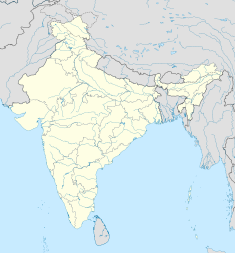
Jaitapur Nuclear Power Project
| Jaitapur Nuclear Power Project | |
|---|---|
 Nuclear power plant symbol | |
  | |
| Country | India |
| Coordinates | 16°59′0″N 73°35′6″E / 16.983333°N 73.585°E / 16.983333; 73.585Coordinates: 16°59′0″N 73°35′6″E / 16.983333°N 73.585°E / 16.983333; 73.585 |
| Status | Received Conditional environmental clearance |
| Construction cost |  100,000 crore (US$22.2 billion) 100,000 crore (US$22.2 billion) |
| Owner(s) | Nuclear Power Corporation of India |
| Reactor information | |
| Reactors planned | 6 x 1650 MW |
| Reactor type(s) | Evolutionary Pressurized Reactors |
| Reactor supplier(s) | Areva |
| Power generation information | |
| Maximum capacity | 9900 MW |
| As of 26 December 2010 | |

9900 MW power project of Nuclear Power Corporation of India (NPCIL) at Madban village of Ratnagiri district in Maharashtra India.[1] It will be the largest nuclear power generating station in the world by net electrical power rating once completed.[2][3]
On December 6, 2010 agreement was signed for the construction of first set of two third-generation reactors Evolutionary Pressurized Reactors and the supply of nuclear fuel for 25 years in the presence of French President Nicolas Sarkozy and Indian Prime Minister Manmohan Singh.[4]
French nuclear engineering firm Areva S.A. and Indian state-owned nuclear operator Nuclear Power Corporation of India signed this multi billion valued agreement of about $9.3 billion. This is a general framework agreement along with agreement on 'Protection of Confidentiality of Technical Data and Information Relating to Nuclear Power Corporation in the Peaceful Uses of Nuclear Energy' was also signed.[5][6][7][8][9] The general framework agreement is a list of the scope of work, terms and conditions of plant life, guarantees and warrantees, guaranteed plant load factor. This agreement is quite important since life of the reactors is anticipated at 60 years. This general framework agreement will also include financial aspect of the project including the terms and conditions of funding, debt funding. Etc.. [10]
The cost of electricity from this power plant will be below
4 per Kilowatt hour.[8]It is one of several nuclear power projects being undertaken in a thin strip of coast of Raigad, Ratnagiri and Sindhudurg districts. The total power generating capacity proposed on a narrow strip of coastal land 50 kilometres (31 mi) to 90 kilometres (56 mi) km wide and 200 kilometres (120 mi) long is around 33,000 MW.[1][11] The prospect of nuclear power generation in India received a boost after the Indo US Civilian Nuclear Agreement became operational in October 2008. India has also signed similar agreements with France and Russia.[12][13][14]
Contents[hide] |
[edit] Geography
Proposed Jaitapur Nuclear Power Project is located at 16°35′N 73°21′E / 16.59°N 73.35°E / 16.59; 73.35. It has an average elevation of 90 feet (27 m). This project will spread over 968 hectares of land. Jaitapur is on the Arabian Sea coast in Ratnagiri district in the southwestern part of Maharashtra, India. The district is a part of Konkan in Western Ghats. In 2006, India applied to the UNESCO MAB for the Western Ghats to be listed as a protected World Heritage Site.[15][16] The Sahyadri Mountain range forms the eastern boundary of the Konkan, and the Arabian Sea marks the western boundary. Jaitapur was one of the important ports in ancient and early medieval times.[17][edit] Reactors
It is proposed to construct 6 European Pressurized Reactor designed and developed by Areva of France, each of 1650 megawatts, thus totaling 9900 megawatts. These are the third generation pressurized water reactors (PWR).Estimated cost of this project is around
100,000 crore (US$22.2 billion). This type of reactor is not operational anywhere in the world.[18][19] The United States Nuclear Regulatory Commission had expressed concerns about the safety of the computer system in this reactor, but Finland has ordered one such reactor nonetheless.[18] Moreover, China has signed the agreement with Areva for three such reactors.[18] Also, all hurdles to the Jaitapur project were cleared when a memorandum of understanding was signed between the Indian and French governments and an agreement between Areva, a French state run company, and the Nuclear Power Corporation of India during French President Nicholas Sarkozy's visit to India during December 2010.[20][edit] Funding
A consortium of French financial institutions will finance this project as a loan. Both French and Indian government will give sovereign guarantee for this loan. The extent of guarantee will depend on what portion of the cost the French credit will cover. The Organization for Economic Co-operation and Development (OECD) will govern the interest rates and other terms of agreement. Interest rates and other terms are under discussion.[21][edit] Controversy and hurdle
[edit] Hurdle
According to Areva lack of clarity on The Civil Liability for Nuclear Damage Bill 2010 passed in Indian Parliament in August 2010 is a hurdle in finalizing deal.[22] This Civil Liability for Nuclear Damage Bill 2010 has a clause deals with the legal binding of the culpable groups in case of a nuclear accident. It allows only the operator (NPCIL) to sue the manufacturers and suppliers. Victims will not be able to sue anyone. In reality, no one will be considered legally liable because the recourse taken by the operator will yield only 1,500 crore (US$ 340.5 million). United states of America has a law on liability-related issues for all non-military nuclear facilities constructed in the United States before 2026 named Price–Anderson Nuclear Industries Indemnity Act. This American Act establishes a no fault insurance-type system in which the first $10 billion is industry-funded as described in the Act (any claims above the $10 billion would be covered by the federal government).[23][24][edit] Controversy
Debate on nuclear power project at Jaitapur is ongoing on various levels. Environmental effects of nuclear power and geological issues have been raised by anti nuclear activists of India against this power project. Even though The Government of Maharashtra state completed land acquisition in January 2010, only 33 out of the 2,335 villagers have accepted compensation cheques as of November 2010.[25][edit] Opponents
- Earthquake prone site
- Since Jaitapur being seismically sensitive area, the danger of an accident has been foremost on the minds of people. According to the Earthquake hazard zoning of India, Jaitapur comes under Zone III. This zone is called the moderate Risk Zone and covers areas liable to MSK VIII.[26][27] Post Chernobyl disaster and Thee mile island accident people world over the world, Environmentalists and citizens of the area are questioning about safety as in 2007 largest nuclear generating station in the world Kashiwazaki-Kariwa Nuclear Power Plant in Japan at the Onagawa Nuclear Power Plant was closed for five months following an earthquake.[28][29]
- Radiation effects
- Effects of nuclear radiation seen in Rawatbhata, India [30] has raised further questions on effects of radiation on health of people staying near nuclear power plants. The rise in deformities seen in Rawatbhata is alarming.
- It is not clear where the nuclear waste emanating from the site will be dumped. The plant is estimated to generate 300 tonnes of waste each year. EPR waste will have about four times as much radioactive Bromine, Iodine, Caesium, etc, compared to ordinary Pressurized water reactor.[18]
- Future of fisheries
- Since the plant will use the sea water for steam generation and then release hot water in the arabian sea, fishermen in villages around are predicting destruction of fisheries in the nearby sea. Media articles also highlight the possible human and fisheries cost of this project [31]
- Tata Institute of Social Sciences Report
- Social impact assessment review of the project is conducted by Jamsetji Tata centre for disaster management of the Tata Institute of Social Sciences (TISS). According to this report, Government of India is not full transparent with its own citizens. The government is hiding facts about huge negative impact on the social and environmental development of the Konkan region in general and government also manipulating notification of the area from high severity earthquake zone to moderate seismic severity zone.[32][33]
[edit] Proponents
decision, but it is foolish romance to think that India can attain high
growth rate and sustain the energy needs of a 1.2 billion population
with the help of solar, wind, biogas and such other forms of energy.
It is paradoxical that environmentalists are against nuclear energy,
As of 2010 India is on the sixth in rank of an elite club of nations, after USA, France, Japan, Russian Federation and Republic of Korea, to have twenty or more nuclear power reactors in operation.[35] The company is currently operating 20 nuclear power plants at six locations in India and is implementing construction of 7 reactors at four locations.[36] In 2009/10 company has generated 18831 million units of electricity.[37]
According to former chairman of Atomic Energy Commission Anil Kakodkar, Jaitapur site is the best as it fulfilled the technical and scientific norms needed for a nuclear power plant.[38][39]


The Environmental impact assessment and other associated studies of the Jaitapur project have been carried out in detail over the last few years by National Environmental Engineering Research Institute (NEERI), Nagpur in collaboration with several other reputed organizations specializing in specific environment studies.[41]
- These studies include,
- Pre-operational Baseline Radiological Survey of the Area around JNPP Site.
- Radiological Dose Apportionment.
- Central Water and Power Research Station Pune
- Thermal Dispersion Studies for Condenser Cooling Water (CCW) Discharges
- Safe Grade Elevation Studies.
- Baseline Biodiversity Study of the area around JNPP Site.
- Konkan Krishi Vidyapith College of Fisheries, Ratnagiri
- Marine Ecological Studies.
- Costal Regulation Zone (CRZ) Demarcation Study.
- HTL.
- LTL.
- Corporate social responsibility
[edit] Protests
Many protests were carried out by local people against the proposed nuclear power plant. On 29 December 2009, 12 January 2010 and 22 January 2010, when the government authorities visited Madban for distribution of cheques in lieu of compulsory land acquisition, the villagers refused to accept the cheques. Government officials were shown black flags, denied any co-operation in carrying out their activities. 72 people were arrested on 22 January 2010 when people protested against the compulsory land acquisition.[43][44][45]On December 4, 2010 protest become violent when over 1500 people were detained from among thousands of protesters, who included environmentalists and local villagers. Members and leaders of the Konkan Bachao Samiti (KBS) and the Janahit Seva Samiti, (organizations that are spearheading opposition to the project), were also detained. In Mumbai, members of various trade unions and social organizations came together to protest against the project. The protesters have raised serious doubts about the neutrality of the Environment Impact Assessment Report, prepared by National Environmental Engineering Research Institute (NEERI) which forms the basis of environmental clearance for the project, since Parallel studies by the Bombay Natural History Society have shown that the project will cause substantial environmental damage.[46]
[edit] Public Hearing
A public hearing on the Environmental impact assessment (EIA) Report, prepared by NEERI was conducted by Maharashtra Pollution Control Board, on behalf of Ministry of Environment and Forests on 16 April 2010, at the plant site. The public hearing became controversial as the EIA report was not delivered for study to 3 of the 4 Gram panchayat (local village bodies) a month in advance.[47][edit] Events
| Major Events as of March 11, 2011 | |
| Date | Event |
|---|---|
| November 28, 2010 | India, France N-regulatory bodies meet on EPR safety issues[48] |
| November 28, 2010 | Conditional environmental clearance |
| December 06, 2010 | Agreement signed with Areva for the construction of first set of two reactors |
[edit] See also
- Nuclear renaissance
- Generation IV reactor
- Economics of new nuclear power plants
- Energy policy of India
- Nuclear power in India
[edit] References
- Notes
- ^ a b Deshpande, VIinaya (November 28, 2010). "It's paradoxical that environmentalists are against nuclear energy: Jairam Ramesh". Mumbai- India: The Hindu. http://www.thehindu.com/news/national/article919959.ece?homepage=true. Retrieved 29 November 2010.
- ^ "Jaitapur nuclear project: villagers turn down compensation". Mumbai- India: The Hindu. July 25, 2010. http://www.thehindu.com/news/national/article532044.ece. Retrieved 29 November 2010.
- ^ "Nuclear Power in India". World Nuclear Association. Updated November 2010. http://www.world-nuclear.org/info/inf53.html. Retrieved 29 November 2010.
- ^ AMIEL, GERALDINE (DECEMBER 6, 2010). "Areva and NPCIL Sign Nuclear Agreement" (in English). PARIS: The Wall street Journal. http://online.wsj.com/article/SB10001424052748704156304576002761899077484.html?mod=googlenews_wsj. Retrieved 6 December 2010.
- ^ "India, France sign nuclear power deal- Hindu" (in English). New Delhi: The Hindu. December 6, 2010. http://www.thehindu.com/news/national/article935337.ece?homepage=true#. Retrieved 6 December 2010.
- ^ "India-France sign agreement on civil nuclear cooperation" (in English). New Delhi: NDTV. December 06, 2010. http://www.ndtv.com/article/india/india-france-sign-agreement-on-civil-nuclear-cooperation-70721. Retrieved 6 December 2010.
- ^ "Sarkozy eyes big contracts" (in English). The Hindu. December 02, 2010. http://www.hindu.com/2010/12/02/stories/2010120265621400.htm. Retrieved 2 December 2010.
- ^ a b Naravane, Vaiju (November 25, 2010). ""We are partners over the long haul" Interview with Anne Lauvergeon, CEO of Areva." (in English). Paris: The Hindu. http://www.thehindu.com/opinion/interview/article911058.ece. Retrieved 30 November 2010.
- ^ Deshpande, VIinaya (November 29, 2010). "Environmental clearance for Jaitapur nuclear project" (in English). The Hindu. http://www.thehindu.com/news/states/other-states/article920159.ece. Retrieved 29 November 2010.
- ^ Jog, Sanjay (December 6, 2010). "NPC, Areva to sign two key pacts on Jaitapur" (in English). Mumbai: BusinessStandard. http://www.business-standard.com/india/news/npc-areva-to-sign-two-key-pactsjaitapur/417266/. Retrieved 6 December 2010.
- ^ "There are other power projects coming up on a thin strip of coast of Raigad, Ratnagiri and Sindhudurg with power generation adding up to 33,000 MW." (in English). Sify News. November 29, 2010. http://sify.com/news/jaitapur-nuclear-plant-in-maharashtra-gets-green-signal-news-national-kl3nkgafdge.html. Retrieved 30 November 2010.
- ^ "DNA Report on France India Nuclear Agreement". Dnaindia.com. http://www.dnaindia.com/india/report_indo-french-civil-nuclear-energy-pact-enters-into-force_1334829. Retrieved 2010-11-28.
- ^ "French Parliament ratifies indo-french nuclear deal". Dnaindia.com. 2009-11-27. http://www.dnaindia.com/world/report_french-parliament-ratifies-indo-french-nuclear-deal_1317162. Retrieved 2010-11-28.
- ^ "Indo-Russian Nuclear Deal on BBC". BBC News. 2008-12-05. http://news.bbc.co.uk/2/hi/7766789.stm. Retrieved 2010-11-28.
- ^ "World Heritage sites, Tentative lists, Western Ghats sub cluster". UNESCO, MAB. 2007. http://whc.unesco.org/en/tentativelists/2103/. Retrieved 2007-03-30.
- ^ "जैतापूर प्रकल्पाच्या सर्व बाजू तपासणार - रत्नागिरी आणि सिंधुदुर्ग हे जिल्हे जैवविविधतेच्या समृद्धीमुळे पर्यावरण मंत्रालयातर्फे यापूर्वीच संरक्षित म्हणून जाहीर.." (in Marathi). New Delhi: Sakal newspaper. June 10, 2010. http://www.esakal.com/esakal/20100610/5254018892963275791.htm. Retrieved 2 December 2010.
- ^ Hebalkar, Sharad (2001) (in English). Ancient Indian ports: with special reference to Maharashtra (illustrated ed.). Munshiram Manoharlal Publishers. p. 175. ISBN 8121508584, 9788121508582. http://books.google.co.in/books?id=3ontAAAAMAAJ&q=Jaitapur&dq=Jaitapur&hl=en&ei=aOr3TJ_RNM3nrAfRp9HvDw&sa=X&oi=book_result&ct=result&resnum=3&ved=0CC4Q6AEwAg. Retrieved December 3, 2010.
- ^ a b c d "Reject French reactors for Jaitapur- A Gopalakrishnan (former chairman of the Atomic Energy Regulatory Board of the Government)" (in English). Indian Express. December 03,2010. http://expressbuzz.com/opinion/op-ed/reject-french-reactors-for-jaitapur/227880.html. Retrieved 3 December 2010.
- ^ "European pressurised reactors costlier, less efficient: expert" (in English). Sify.com, India News Portal. December 03, 2010. http://sify.com/finance/european-pressurised-reactors-costlier-less-efficient-expert-news-default-kmdwuhgagdf.html. Retrieved 4 December 2010.
- ^ "Nicholas Sarkozy and Manmohan Singh in nuclear deal". New Delhi: BBC. December 6, 2010. http://www.bbc.co.uk/news/world-south-asia-11923836. Retrieved 6 December 2010.
- ^ Mukul, Jyoti (December 23, 2010). "Sovereign guarantee for Jaitapur Nuclear project" (in English). New Delhi: Business Standard. http://www.business-standard.com/india/news/sovereign-guarantee-for-jaitapur-nuclear-project/419286/. Retrieved 26 December 2010.
- ^ Roy, Shubhajit (Dec 07, 2010). "Jaitapur n-reactors flagged off but liability concerns remain" (in English). New Delhi: Indian Express. http://www.indianexpress.com/news/Jaitapur-n-reactors-flagged-off-but-liability-concerns-remain/721283. Retrieved 18 December 2010.
- ^ "Civil liability for nuclear damage". Eoearth.org. http://www.eoearth.org/article/Civil_liability_for_nuclear_damage. Retrieved 2010-12-21.
- ^ "US nuke team pushes for firm commitment on project sites" (in English). The Hindu BusinessLine. Jan 14, 2009. http://www.thehindubusinessline.com/2009/01/14/stories/2009011452031500.htm. Retrieved 26 December 2010.
- ^ Rebello, Snehal (November 29, 2010). "Nod for Jaitapur nuclear project in time for French President's visit" (in English). Mumbai: Hindustan Times. http://www.hindustantimes.com/Nod-for-Jaitapur-nuclear-project-in-time-for-French-President-s-visit/Article1-632133.aspx. Retrieved 30 November 2010.
- ^ "Vulnerability Zones in India" (in English). ReliefWeb. http://www.reliefweb.int/rw/RWB.NSF/db900SID/SKAR-64GBJW?OpenDocument. Retrieved 29 November 2010.
- ^ "Seismic Zone Map of India". Mapsofindia.com. http://www.mapsofindia.com/maps/india/seismiczone.htm. Retrieved 2010-11-28.
- ^ "Nuclear plant hit by earthquake closed indefinitely in Japan" (in English). KASHIWAZAKI, Japan: The New York Times. July 18, 2007. http://www.nytimes.com/2007/07/18/world/asia/18iht-japan.2.6713634.html?_r=1. Retrieved 29 November 2010.
- ^ "Nuclear Power, Caught in an Earthquake, Has Japan's earthquake sent us a wakeup call?" (in English). ABC news. July 17, 2007. http://blogs.abcnews.com/scienceandsociety/2007/07/nuclear-power-c.html. Retrieved 29 November 2010.
- ^ "Rawatbhata Study by Dr. Surendra Gadekar". Groups.yahoo.com. http://groups.yahoo.com/group/SAAN_/message/1250. Retrieved 2010-11-28.
- ^ "Tehelaka Report". Tehelka.com. http://www.tehelka.com/story_main46.asp?filename=Ne180910The_nuclear.asp. Retrieved 2010-11-28.
- ^ "Anti-Jaitapur project campaigners up ante" (in English). Special Correspondent (Mumbai: Sakaal Times). December 03, 2010. http://sakaaltimes.com/SakaalTimesBeta/20101203/5299696247312080006.htm. Retrieved 27 December 2010.
- ^ "MISSION AND OBJECTIVES of NPCIL" (in English). NPCIL. http://www.npcil.nic.in/main/objective.aspx. Retrieved 1 December 2010.
- ^ Nagaich, Nalinish (November 27, 2010). "India at Sixth Rank in the World with its 20th Nuclear Power Reactor Commencing Operation" (in English). Mumbai- India: Nuclear Power Corporation of India Limited. http://www.npcil.nic.in/pdf/press_27nov2010.pdf. Retrieved 1 December 2010.
- ^ "about Nuclear Power Corporation of India Limited" (in English). Nuclear Power Corporation of India Limited. http://www.npcil.nic.in/main/AboutUs.aspx. Retrieved 1 December 2010.
- ^ "Nuclear Power Generation (2006-07 to 2010-11) by NPCL" (in English). Nuclear Power Corporation of India Limited. http://www.npcil.nic.in/main/AllProjectOperationDisplay.aspx. Retrieved 1 December 2010.
- ^ "Jaitapur nuclear power plant no threat to environment: Kakodkar" (in English). Pune: Indian Express. December 01, 2010. http://www.indianexpress.com/news/Jaitapur-nuclear-power-plant-no-threat-to-environment--Kakodkar/718504/. Retrieved 1 December 2010.
- ^ (in English) Indian journal of marine sciences. Volume-23, Page- 34. Council of Scientific & Industrial Research. 1994. http://books.google.co.in/books?id=n5scAQAAIAAJ&q=Jaitapur&dq=Jaitapur&hl=en&ei=sPT3TMbEB4qqrAfiwfnvDw&sa=X&oi=book_result&ct=result&resnum=10&ved=0CEYQ6AEwCTiCAQ. Retrieved December 3, 2010.
- ^ "Jaitapur project will not harm environment, says Kakodkar" (in English). Pune: Times of India.. December 01, 2010. http://timesofindia.indiatimes.com/city/pune/Jaitapur-project-will-not-harm-environment-says-Kakodkar/articleshow/7018390.cms. Retrieved 1 December 2010.
- ^ "Nuclear Power Corporation of India Limited - PRESS RELEASE" (in English). Mumbai- India: Nuclear Power Corporation of India Limited. November 29, 2010. http://www.npcil.nic.in/pdf/press_29nov2010.pdf. Retrieved 30 November 2010.
- ^ Jog, Sanjay (November 29, 2010). "Nuclear Power Corporation is committed to environment protection' Q&A: S K Jain, CMD" (in English). Mumabi: Business Standard. http://www.business-standard.com/india/news/qa-s-k-jain-cmd-nuclear-power-corporation/416475/. Retrieved 6 December 2010.
- ^ Balakrishnan, Bhaskar (February 10, 2009). "Unleashing India's nuclear potential" (in English). Business Daily from THE HINDU. http://www.thehindubusinessline.com/2009/02/10/stories/2009021050150800.htm. Retrieved 2 December 2010.
- ^ Menon, Meena (January 18, 2010). "Nuclear power plant opposed" (in English). MADBAN (Ratnagiri district): The Hindu. http://www.hindu.com/2010/01/18/stories/2010011856280300.htm. Retrieved 2 December 2010.
- ^ "जैतापूर प्रकल्प : 'कोकण बचाव समिती'चे थेट वाद-विवादाचे आव्हान - बैठक ३ डिसेंबरला" (in Marathi). Mumbai: लोकसत्ता Loksatta. November 30, 2010. http://www.loksatta.com/index.php?option=com_content&view=article&id=118583:2010-11-30-20-53-12&catid=26:2009-07-09-02-01-20&Itemid=3. Retrieved 2 December 2010.
- ^ Deshpande, Vinaya (December 5, 2010). "Protest against Jaitapur nuclear plant" (in English). The Hindu. http://www.hindu.com/2010/12/05/stories/2010120562481000.htm. Retrieved 5 December 2010.
- ^ July 5, 2010 (2010-07-05). "Jaitapur EIA Public Hearing". Lokayatpune.wordpress.com. http://lokayatpune.wordpress.com/2010/07/05/jaitapur-nuclear-power-plant-public-hearing-transcript. Retrieved 2010-11-28.
- ^ "India, France N-regulatory bodies meet on EPR safety issues" (in English). Mumbai: MSN News. November 24, 2010. http://news.in.msn.com/business/article.aspx?cp-documentid=4621687. Retrieved 5 December 2010.
- Further reading
- Struwe, D. Jacobs, H. Imke, U. Consequence evaluation of in-vessel fuel coolant interactions in the European Pressurized Water Reactor ISSN 0947-8620
- Manfred, Fischer. The severe accident mitigation concept and the design measures for core melt retention of the European Pressurized Reactor (EPR) Original Research Article, Nuclear Engineering and Design, Volume 230, Issues 1-3, May 2004, Pages 169-180
- Lvins, Amory B. and Price, John H. (1975). Non-Nuclear Futures: The Case for an Ethical Energy Strategy (Cambridge, Mass.: Ballinger Publishing Company, 1975. xxxii + 223pp. ISBN 0-88410-602-0, ISBN 0-88410-603-9).
- with Mycle Schneider, Antony Froggatt, and Doug Koplow. The World Nuclear Industry Status Report 2009 Commissioned by German Federal Ministry of Environment, Nature Conservation and Reactor Safety, August 2009.
- Voices from Chernobyl: The Oral History of a Nuclear Disaster (Dalkey Archive Press 2005; ISBN 1-56478-401-0)
- Cravens, Gwyneth (2007). Power to Save the World: the Truth about Nuclear Energy. New York: Knopf. pp. 464. ISBN 0-307-26656-7.
- Herbst, Alan M. and George W. Hopley (2007). Nuclear Energy Now: Why the Time has come for the World's Most Misunderstood Energy Source, Wiley.
- Elliott, David (2007). Nuclear or Not? Does Nuclear Power Have a Place in a Sustainable Energy Future?, Palgrave.
[edit] External links


| ||||||||||||||||||||||||||

| ||||||||||||||||||||
| |||||||||||||||||||||||||


Haripur nuclear power project gets environmental clearance
www.prokerala.com/news/articles/a107246.html - Cached
Scrap Haripur nuclear power project, demand locals - Hindustan Times
www.hindustantimes.com/...Haripur-nuclear-power-project.../Article1-498054.aspx - Cached
Haripur nuclear power project gets environmental clearance
www.thaindian.com/.../haripur-nuclear-power-project-gets-environmental-clearance_100303461.html - United States - Cached
Nuclear power plant to come up in West Bengal - 1 post - 16 Jul 2010
Trinamool Minister opposes Haripur nuclear power plant - 1 post - 8 Dec 2009
Get more discussion results
Protest against Haripur nuclear plant in West Bengal | India ...
www.indiaenvironmentportal.org.in › News - Cached - Similar
Work on NPCIL Haripur project to start in 2014
www.business-standard.com › Home › Economy & Policy - Cached
HARIPUR NUCLEAR POWER PLANT: POWER AT ALL COST? « Indian Vanguard
indianvanguard.wordpress.com/.../haripur-nuclear-power-plant-power-at-all-cost/ - Cached
Work on Haripur n-plant to begin in 2012-16 period | Coal Geology
coalgeology.com/work-on-haripur-n...to.../14806/ - United States - Cached
Work on Haripur n-plant to begin in 2012-16 period - World News ...
www.newkerala.com › News › west-bengal-news - Cached
No nuclear power plant at Haripur as locals oppose - The Economic ...
economictimes.indiatimes.com › News › News By Industry - Cached
Haripur nuclear power project gets clearance | iGovernment.in
www.igovernment.in › Infrastructure - Cached
Information on how a Tsunami is caused


The wavelength of a tsunami can range from 10 to 500 km and wave periods up to an hour. In the deep ocean, where the typical water depth is around 4000 m, a tsunami will therefore travel at around 700 kilometer per hour.
The amplitude (i.e wave height) of tsunamis that are generated by underwater earthquakes is determined by the amount by which the sea-floor is displaced. Similarly, the wavelength and period of the tsunami are determined by the size and shape of the underwater disturbance.
Travelling at high speeds, tsunamis can cover a large distance causing huge human and material loss to the country.
Nuclear power in India
India's domestic uranium reserves are small and the country is dependent on uranium imports to fuel its nuclear power industry. Since early 1990s, Russia has been a major supplier of nuclear fuel to India.[5] Due to dwindling domestic uranium reserves,[6] electricity generation from nuclear power in India declined by 12.83% from 2006 to 2008.[7] Following a waiver from the Nuclear Suppliers Group in September 2008 which allowed it to commence international nuclear trade,[8] India has signed bilateral deals on civilian nuclear energy technology cooperation with several other countries, including France,[9] the United States,[10] the United Kingdom,[11] and Canada.[12] India has also uranium supply agreements with Russia,[13][14] Mongolia,[15] Kazakhstan,[16] Argentina[17] and Namibia.[18] An Indian private company won a uranium exploration contract in Niger.[19]
India now envisages to increase the contribution of nuclear power to overall electricity generation capacity from 4.2% to 9% within 25 years.[20] In 2010, India's installed nuclear power generation capacity will increase to 6,000 MW.[21] As of 2009, India stands 9th in the world in terms of number of operational nuclear power reactors and is constructing 9 more, including two EPRs being constructed by France's Areva.[22] Indigenous atomic reactors include TAPS-3, and -4, both of which are 540 MW reactors.[23] India's US$717 million fast breeder reactor project is expected to be operational by 2010.[24]
Contents[hide] |
[edit] Nuclear Power Growth in India
[edit] Growth
India, being a non-signatory of the Nuclear Non-Proliferation Treaty, has been subjected to a defacto nuclear embargo from members of the Nuclear Suppliers Group (NSG) cartel. This has prevented India from obtaining commercial nuclear fuel, nuclear power plant components and services from the international market, thereby forcing India to develop its own fuel, components and services for nuclear power generation. The NSG embargo has had both negative and positive consequences for India's Nuclear Industry. On one hand, the NSG regime has constrained India from freely importing nuclear fuel at the volume and cost levels it would like to support the country's goals of expanding its nuclear power generation capacity to at least 20,000 MW by 2020. Also, by precluding India from taking advantage of the economies of scale and safety innovations of the global nuclear industry, the NSG regime has driven up the capital and operating costs and damaged the achievable safety potential of Indian nuclear power plants. On the other hand, the NSG embargo has forced the Indian government and bureaucracy to support and actively fund the development of Indian nuclear technologies and industrial capacities in all key areas required to create and maintain a domestic nuclear industry. This has resulted in the creation of a large pool of nuclear scientists, engineers and technicians that have developed new and unique innovations in the areas of Fast Breeder Reactors, Thermal Breeder Reactors, the Thorium fuel cycle, nuclear fuel reprocessing and Tritium extraction & production. Ironically, had the NSG sanctions not been in place, it would have been far more cost effective for India to import foreign nuclear power plants and nuclear fuels than to fund the development of Indian nuclear power generation technology, building of India's own nuclear reactors, and the development of domestic uranium mining, milling and refining capacity.The Indian nuclear power industry is expected to undergo a significant expansion in the coming years thanks in part to the passing of The Indo-US nuclear deal. This agreement will allow India to carry out trade of nuclear fuel and technologies with other countries and significantly enhance its power generation capacity.[25] when the agreement goes through, India is expected to generate an additional 25,000 MW of nuclear power by 2020, bringing total estimated nuclear power generation to 45,000 MW.[26]
India has already been using imported enriched uranium and are currently under International Atomic Energy Agency (IAEA) safeguards, but it has developed various aspects of the nuclear fuel cycle to support its reactors. Development of select technologies has been strongly affected by limited imports. Use of heavy water reactors has been particularly attractive for the nation because it allows Uranium to be burnt with little to no enrichment capabilities. India has also done a great amount of work in the development of a Thorium centered fuel cycle. While Uranium deposits in the nation are limited (see next paragraph) there are much greater reserves of Thorium and it could provide hundreds of times the energy with the same mass of fuel. The fact that Thorium can theoretically be utilized in heavy water reactors has tied the development of the two. A prototype reactor that would burn Uranium-Plutonium fuel while irradiating a Thorium blanket is under construction at the Madras/Kalpakkam Atomic Power Station.
Uranium used for the weapons program has been separate from the power program, using Uranium from indigenous reserves. This domestic reserve of 80,000 to 112,000 tons of uranium (approx 1% of global uranium reserves) is large enough to supply all of India's commercial and military reactors as well as supply all the needs of India's nuclear weapons arsenal. Currently, India's nuclear power reactors consume, at most, 478 metric tonnes of uranium per year.[27] Even if India were quadruple its nuclear power output (and reactor base) to 20GW by 2020, nuclear power generation would only consume 2000 metric tonnes of uranium per annum. Based on India's known commercially viable reserves of 80,000 to 112,000 tons of uranium, this represents a 40 to 50 years uranium supply for India's nuclear power reactors (note with reprocessing and breeder reactor technology, this supply could be stretched out many times over). Furthermore, the uranium requirements of India's Nuclear Arsenal are only a fifteenth (1/15) of that required for power generation (approx. 32 tonnes), meaning that India's domestic fissile material supply is more than enough to meet all needs for it strategic nuclear arsenal. Therefore, India has sufficient uranium resources to meet its strategic and power requirements for the foreseeable future.[27]
[edit] Nuclear power plants
Currently, twenty nuclear power reactors produce 4,780.00 MW (2.9% of total installed base).[28][29]| Power station | Operator | State | Type | Units | Total capacity (MW) |
|---|---|---|---|---|---|
| Kaiga | NPCIL | Karnataka | PHWR | 220 x 4 | 880 |
| Kakrapar | NPCIL | Gujarat | PHWR | 220 x 2 | 440 |
| Kalpakkam | NPCIL | Tamil Nadu | PHWR | 220 x 2 | 440 |
| Narora | NPCIL | Uttar Pradesh | PHWR | 220 x 2 | 440 |
| Rawatbhata | NPCIL | Rajasthan | PHWR | 100 x 1 200 x 1 220 x 4 | 1180 |
| Tarapur | NPCIL | Maharashtra | BWR (PHWR) | 160 x 2 540 x 2 | 1400 |
| Total | 20 | 4780 |
| Power station | Operator | State | Type | Units | Total capacity (MW) |
|---|---|---|---|---|---|
| Kudankulam | NPCIL | Tamil Nadu | VVER-1000 | 1000 x 2 | 2000 |
| Kalpakkam | NPCIL | Tamil Nadu | PFBR | 500 x 1 | 500 |
| Kakrapar | NPCIL | Gujarat | PHWR | 700 x 2 | 1400 |
| Rawatbhata | NPCIL | Rajasthan | PHWR | 700 x 2 | 1400 |
| Banswara | NPCIL | Rajasthan | PHWR | 700 x 2 | 1400 |
| Total | 8 | 6700 |
| Power station | Operator | State | Type | Units | Total capacity (MW) |
|---|---|---|---|---|---|
| Kudankulam | NPCIL | Tamil Nadu | VVER-1200 | 1200 x 2 | 2400 |
| Jaitapur | NPCIL | Maharashtra | EPR | 1650 x 6 | 9900 |
| Kaiga | NPCIL | Karnataka | PWR | 1000 x 1, 1500 x 1 | 2500 |
| Bhavini | PFBR | 470 x 4 | 1880 | ||
| NPCIL | AHWR | 300 | 300 | ||
| NTPC | PWR | 1000 x 2 | 2000 | ||
| NPCIL | PHWR | 640 x 4 | 2560 | ||
| Total | 21 | 21540 |
| Power station | Operator | State | Type | Units | Total capacity (MW) |
|---|---|---|---|---|---|
| Kudankulam | NPCIL | Tamil Nadu | VVER-1200 | 1200 x 2 | 2400 |
| Jaitapur | NPCIL | Maharastra | EPR | 1600 x 2 | 3200 |
| Pati Sonapur | Orissa | PWR | 6000 | ||
| Kumaharia | Haryana | PWR | 2800 | ||
| Saurashtra | Gujarat | PWR | |||
| Pulivendula | NPCIL 51%, AP Genco 49% | Andhra Pradesh | PWR | 2000 x 1 | 2000 |
| Kovvada | Andhra Pradesh | PWR | |||
| Haripur | West Bengal | PWR | |||
| Total | 15 |
| Power station | Operator | State | Type | Units | Total capacity (MW) |
|---|---|---|---|---|---|
| Kudankulam | NPCIL | Tamil Nadu | VVER-1200 | 1200 x 2 | 2400 |
| Total | 2 | 2400 |
[edit] Accidents
| Nuclear power plant accidents in India[32][33] | |||
Date | Location | Description | Cost (in millions 2006 US$) |
|---|---|---|---|
| 4 May 1987 | Kalpakkam, India | Fast Breeder Test Reactor at Kalpakkam refuelling accident that ruptures the reactor core, resulting in a two-year shutdown | 300 |
| 10 September 1989 | Tarapur, Maharashtra, India | Operators at the Tarapur Atomic Power Station find that the reactor had been leaking radioactive iodine at more than 700 times normal levels. Repairs to the reactor take more than a year | 78 |
| 13 May 1992 | Tarapur, Maharashtra, India | A malfunctioning tube causes the Tarapur Atomic Power Station to release 12 curies of radioactivity | 2 |
| 31 March 1993 | Bulandshahr, Uttar Pradesh, India | The Narora Atomic Power Station suffers a fire at two of its steam turbine blades, no damage to the reactor. All major cables burnt. | 220 |
| 2 February 1995 | Kota, Rajasthan, India | The Rajasthan Atomic Power Station leaks radioactive helium and heavy water into the Rana Pratap Sagar River, necessitating a two-year shutdown for repairs | 280 |
| 22 October 2002 | Kalpakkam, India | Almost 100 kg radioactive sodium at a fast breeder reactor leaks into a purification cabin, ruining a number of valves and operating systems | 30 |
[edit] See also
- [[:Category:Nuclear power stations in India
[edit] References
- ^ "~6429693.xls" (PDF). http://cea.nic.in/power_sec_reports/Executive_Summary/2008_12/27-33.pdf. Retrieved 2010-08-22.
- ^ Verma, Nidhi (2008-08-18). "Westinghouse, Areva eye India nuclear plants-paper". Reuters. http://www.reuters.com/article/marketsNews/idUSDEL16711520080818. Retrieved 2010-08-22.
- ^ "India eyeing 64,000 MW nuclear power capacity by 2032: NPCIL". The Economic Times. 2010-10-11. http://economictimes.indiatimes.com/news/news-by-industry/energy/power/India-eyeing-63000-MW-nuclear-power-capacity-by-2032-NPCIL/articleshow/6730724.cms.
- ^ Pham, Lisa (2009-10-20). "Considering an Alternative Fuel for Nuclear Energy". New York Times. http://www.nytimes.com/2009/10/20/business/global/20renthorium.html?_r=1.
- ^ "Russia fulfis promise, supplies uranium to India". Expressindia.com. http://www.expressindia.com/news/fullstory.php?newsid=65381. Retrieved 2010-08-22.
- ^ "Uranium shortage holding back India's nuclear power drive - Corporate News". livemint.com. 2008-06-30. http://www.livemint.com/2008/06/30222448/Uranium-shortage-holding-back.html. Retrieved 2010-08-22.
- ^ "Ministry of Power". Powermin.gov.in. http://powermin.gov.in/JSP_SERVLETS/internal.jsp#. Retrieved 2010-08-22.
- ^ "news.outlookindia.com". Outlookindia.com. http://www.outlookindia.com/pti_news.asp?id=321896. Retrieved 2010-08-22.
- ^ "India, France agree on civil nuclear cooperation". Rediff.com. http://www.rediff.com/news/2008/jan/25france.htm. Retrieved 2010-08-22.
- ^ "Bush signs India-US nuclear deal into law - Home". livemint.com. 2008-10-09. http://www.livemint.com/2008/10/09005930/Bush-signs-IndiaUS-nuclear-de.html?d=1. Retrieved 2010-08-22.
- ^ "UK, India sign civil nuclear accord". Reuters. 2010-02-13. http://www.reuters.com/article/idUSTRE61C21E20100213?type=politicsNews. Retrieved 2010-08-22.
- ^ "Canada, India reach nuclear deal". Montrealgazette.com. 2009-11-29. http://www.montrealgazette.com/news/Canada+India+reach+nuclear+deal/2281106/story.html. Retrieved 2010-08-22.
- ^ "India to get 510 tonnes of uranium from Kazakhstan, Russia". Hindu Business Line. http://www.thehindubusinessline.com/2010/03/11/stories/2010031153801800.htm.
- ^ "South Asia | Russia agrees India nuclear deal". BBC News. 2009-02-11. http://news.bbc.co.uk/2/hi/south_asia/7883223.stm. Retrieved 2010-08-22.
- ^ "India, Kazakhstan sign nuclear pact". Financial Express. http://www.financialexpress.com/news/India-signs-civil-nuclear-deal-with-Mongolia/516967/.
- ^ Sanjay Dutta, TNN, Jan 23, 2009, 01.35am IST (2009-01-23). "Kazakh nuclear, oil deals hang in balance - International Business - Business - The Times of India". Timesofindia.indiatimes.com. http://timesofindia.indiatimes.com/Business/Kazakh_oil_deals_hang_in_balance/articleshow/4019306.cms. Retrieved 2010-08-22.
- ^ India, Argentina ink agreement on peaceful uses of N-energy, the Hindu
- ^ "India, Namibia sign uranium supply deal". http://www.republikein.com.na/die-mark/india-namibia-sign-uranium-supply-deal.92293.php.
- ^ "Indian firm acquires uranium mining rights in Niger | Uranium, Niger, Company, Bajla, Government". taurianresources.co.in. http://taurianresources.co.in/default/content/view/1/36/lang,english/. Retrieved 2010-12-22.
- ^ "Slowdown not to affect India's nuclear plans". Business-standard.com. 2009-01-21. http://www.business-standard.com/india/news/slowdown-not-to-affect-indias-nuclear-plans/19/57/53400/on. Retrieved 2010-08-22.
- ^ "Nuclear power generation to touch 6,000 Mw by next year". Business-standard.com. http://www.business-standard.com/india/news/nuclear-power-generation-to-touch-6000-mw-by-next-year/17/25/55038/on. Retrieved 2010-08-26.
- ^ "Areva to build two nuclear reactors in India-paper". Reuters. 2009-02-03. http://www.reuters.com/article/rbssIndustryMaterialsUtilitiesNews/idUSL360076520090203. Retrieved 2010-08-22.
- ^ (http://www.npcil.nic.in/PlantsInOperation.asp
- ^ "India's fast breeder reactor nears second milestone". Chennai, India: Hindu.com. 2009-06-16. http://www.hindu.com/thehindu/holnus/008200906161340.htm. Retrieved 2010-08-26.
- ^ [1][dead link]
- ^ "At G-8, Singh, Bush reaffirm commitment to nuclear deal - Economy and Politics". livemint.com. 2008-07-10. http://www.livemint.com/2008/07/10012202/At-G8-Singh-Bush-reaffirm-c.html. Retrieved 2010-08-22.
- ^ a b http://www.carnegieendowment.org/files/atomsforwarfinal4.pdf
- ^ "Nuclear Power Plants In India - Nuclear Power Corporation of India Limited". Npcil.nic.in. http://www.npcil.nic.in/main/AllProjectOperationDisplay.aspx. Retrieved 2011-01-21.
- ^ "India's 20th nuclear reactor connected to power grid". The Times of India. 2011-01-19. http://timesofindia.indiatimes.com/india/Indias-20th-nuclear-reactor-connected-to-power-grid/articleshow/7319085.cms. Retrieved 2011-01-22.
- ^ "Projects Under Construction - Nuclear Power Corporation of India Limited". Npcil.nic.in. http://www.npcil.nic.in/main/ProjectConstructionDisplay.aspx. Retrieved 2011-01-22.
- ^ a b Benjamin K. Sovacool. A Critical Evaluation of Nuclear Power and Renewable Electricity in Asia, Journal of Contemporary Asia, Vol. 40, No. 3, August 2010, p. 380.
- ^ Benjamin K. Sovacool. A Critical Evaluation of Nuclear Power and Renewable Electricity in Asia, Journal of Contemporary Asia, Vol. 40, No. 3, August 2010, pp. 393–400.
- ^ Benjamin K. Sovacool (2009). The Accidental Century - Prominent Energy Accidents in the Last 100 Years
| ||||||||||||||||||||
| |||||||||||||||||
| ||||||||||||||||||||||||||
--
Palash Biswas
Pl Read:
http://nandigramunited-banga.blogspot.com/





No comments:
Post a Comment